📖 Isaiah 45:1, 4–6 | Psalm 96 | 1 Thessalonians 1:1–5b | Matthew 22:15–21
A man once found a twenty-dollar bill in the pocket of an old jacket. It was wrinkled, stained, and looked as though it had survived a washing machine, two hurricanes, and possibly a family argument. He took it to a store, wondering whether the cashier would accept it. She examined it, held it up to the light, and put it in the register. It was still worth twenty dollars. The bill had been through a lot, but its value hadn’t disappeared. I wonder how many of us have trouble believing that about ourselves.
In today’s Gospel, Jesus is asked a question designed to trap Him: Is it lawful to pay taxes to Caesar? If He says yes, He risks alienating His people. If He says no, He risks arrest. Jesus asks for a coin. “Whose image is this?” They answer, “Caesar’s.” And Jesus replies, “Repay to Caesar what belongs to Caesar and to God what belongs to God.” But beneath His answer lies a greater question: If Caesar’s image is stamped on a coin, whose image is stamped on you? God’s. Coins can be damaged, rejected, or melted down. But God’s image within you cannot be erased by any court, criminal record, or human mistake.
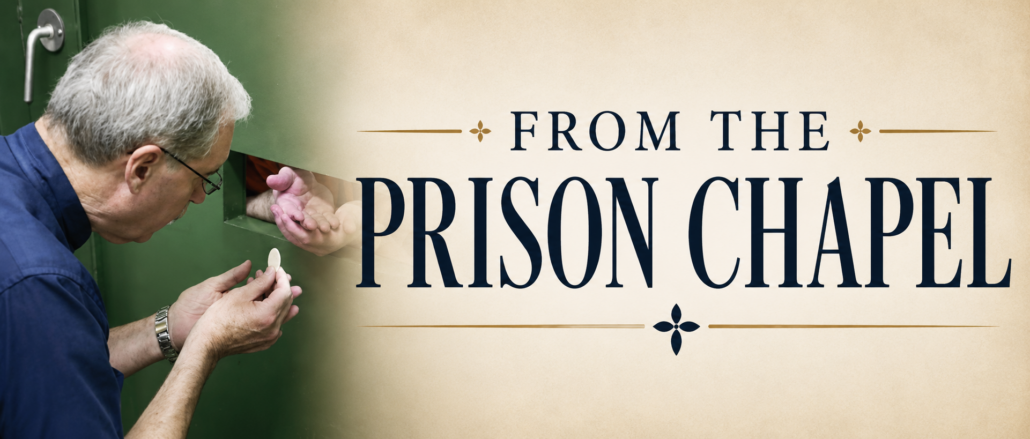
Here, people are identified by numbers, records, charges, and sentences. Those things may describe someone’s circumstances, but they cannot tell the whole story of a human life. Some of us carry terrible regrets: decisions that hurt people we love, words we wish we could take back, opportunities we threw away. Others carry wounds inflicted by people who should have protected them. And sometimes the hardest part isn’t what others think of us. It’s what we have come to believe about ourselves.
There is an important difference between guilt and shame. Guilt says, “I did something wrong.” Shame whispers, “I am something wrong.” Guilt can lead us toward repentance and change. Shame convinces us that change is pointless because we are beyond repair. Sometimes we hear what is wrong with us so often that we forget there is still something sacred within us. But God has never forgotten. He sees our sins without losing sight of His image.
Notice whom God addresses in our first reading: Cyrus, a foreign king who doesn’t even know Him. Yet God says, “I have called you by your name.” Before Cyrus recognizes God, God already knows Cyrus. God doesn’t wait for someone to become religious or get everything right before calling them. Perhaps someone here needs to hear that today. You don’t have to wait until you get your life together for God to begin working in it. He knows your name, your struggles, your regrets, and the goodness you may have stopped seeing in yourself.
And being loved by God doesn’t mean our mistakes don’t matter. They matter enormously, especially when others have suffered because of them. But repentance isn’t spending the rest of our lives hating ourselves. It’s finding the courage to face the truth, take responsibility, seek forgiveness, make amends where possible, and begin living differently.
Saint Paul praises the Thessalonians for their endurance in hope. And if anyone understands endurance, it’s people living behind these walls. Some days seem endless. You miss people you love. You count the days, and sometimes the days seem to count you. But Paul isn’t praising people for having easy lives. He’s praising them because even in difficult circumstances, faith and love continue bearing fruit. Endurance isn’t simply surviving another day. It’s refusing to let another day pass without becoming a little more human, a little more loving, a little closer to God.
And that can begin right here. Refusing to join in when someone is humiliated. Choosing not to answer an insult with another insult. Praying for someone you haven’t spoken to in years. Or finally admitting, without excuses, “I was wrong.” These choices may not open a locked door, but they can open something within us. We may not always have the freedom to change our circumstances, but with God’s grace, we can begin changing the person we are becoming.
Remember that crumpled twenty-dollar bill? The cashier didn’t have to iron it, clean it, or make it look brand-new before recognizing its value. She recognized what was already there. And that’s what God wants you to understand today. He sees the damage, the scars, and the mistakes. He doesn’t pretend they aren’t there. But He also sees what they have never been able to destroy.
Your past may explain where you are, but it does not have the authority to decide who you will become. Your mistakes may have changed your circumstances, but they have not changed whose image you bear. And the God who gave you that image has not given up on you.
CLOSING PRAYER
Lord Jesus, You know my name, my story, and the parts of my life I wish I could change. You know the people I miss, the mistakes I regret, and the worries that keep me awake at night. Sometimes I feel forgotten. Sometimes I struggle to forgive others, and sometimes the hardest person to forgive is myself. Give me the courage to face my past honestly without believing that my past is all I am. Help me recognize Your image within me, even when I struggle to see anything good in myself.
Lord, I cannot change yesterday, and I do not know what tomorrow will bring. But I can give You my heart today. Teach me patience when I am frustrated, kindness when I am hurting, and hope when the days seem endless. Bless the people I love, the people I have hurt, and those who have hurt me. Help me make peace where I can and accept what I cannot change. And whenever I begin to believe that my life no longer matters, remind me that I am still Your child, still made in Your image, and still capable of becoming the person You created me to be. Amen.
Read Today’s Homily in Spanish