
Our team consists of a variety of people who share their gifts and talents with Dismas Ministry. Key staff members, interns, and volunteers comprise our “mission family” at our operations located on the campus of Cardinal Stritch University in Milwaukee, Wisconsin.
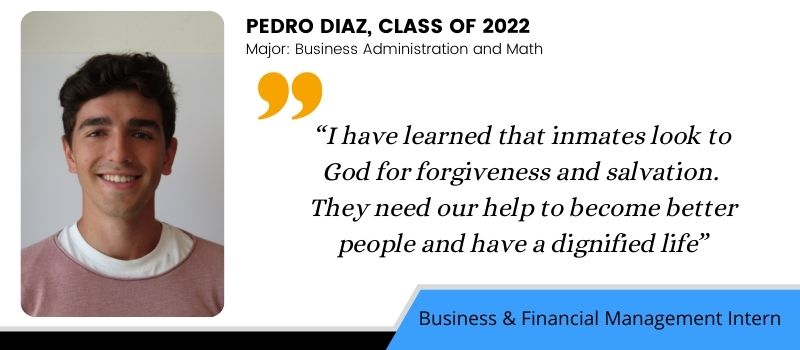
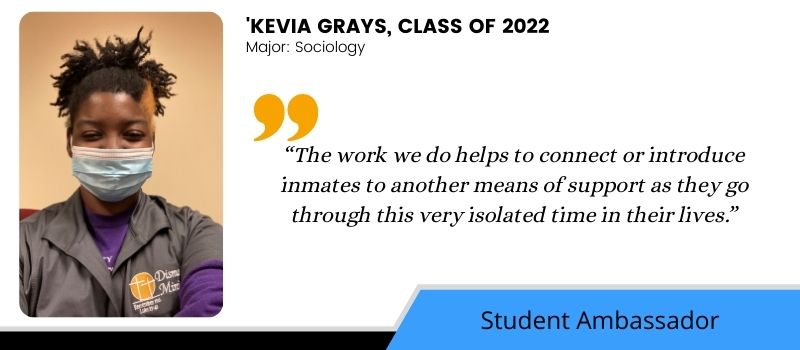
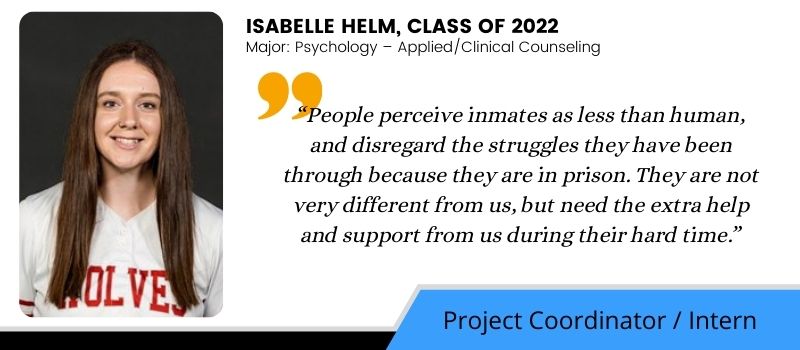
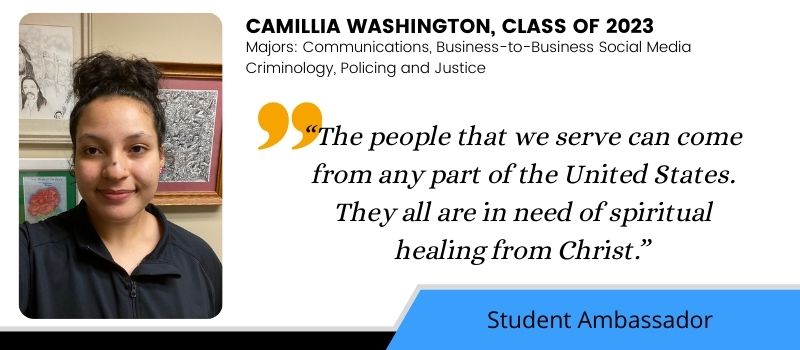
We are pleased to introduce the Stritch students, and members our team, to you. Some of the students are preparing for graduation, and others are moving onto summer internship and work opportunities. Before they conclude their work with us, we asked them to reflect on and share a brief statement about their time with Dismas Ministry.
Thank you to all of the Stritch students for their contributions to our shared mission in support of prisoners and their loved ones.
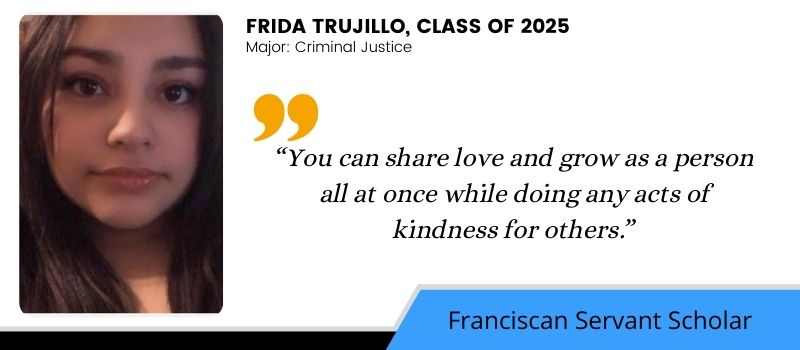
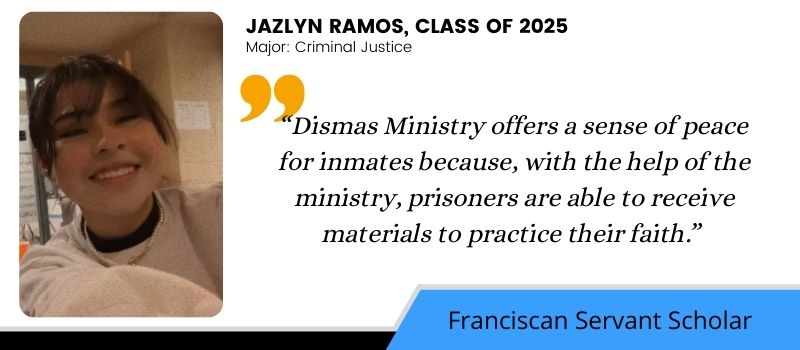
We welcome the opportunity to collaborate with many people across generations who want to serve the poor and marginalized in our society. As a small nonprofit, Dismas Ministry continues to build relationships with individuals and groups who align with our mission. And, we are blessed to work with students, staff and faculty on the campus of Cardinal Stritch University, where our offices are located. Here is an inspiring story of one student, and member of the Dismas Ministry team, who is making a difference both on campus and in her community.
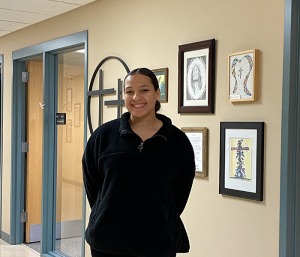 Cardinal Stritch University junior Camillia Washington is the personification of an involved college student. She is president of the Black Student Union, is in her second year as a resident assistant, and makes a mean latte at The Bean, Stritch’s on-campus café.
She credits her mom, Latoyia Washington, for helping her build a strong foundation from which she can learn how to balance her academic responsibilities, many activities and stay organized.
“I am grateful for all of the opportunities at Stritch that have helped me grow,” Camillia reflected. “The Wisconsin Grant has helped me tremendously by supporting my efforts to pay for school. The grant reinforces the belief of all students’ ability to attend college.”
The Milwaukee native is majoring in communications: business-to-business and social media and minoring in criminology and police and justice systems. This interdisciplinary academic focus allows Camillia to customize her studies and prepare her to make a difference. She wants to travel the world to compare and contrast justice systems and identify solutions that will have a meaningful and lasting impact.
“As a person of color, I believe I have a responsibility to bring attention to problems in the systems, especially those that affect People of Color,” Camillia shared. “I want to use social media as a platform for change and improvement.”
She has found the perfect opportunity to explore her interests more deeply right on the Stritch campus, which serves as home to Dismas Ministry, an organization that provides prisoners across the United States with the free Catholic scripture, faith and prayer resources they need to restore their relationship with the Catholic church and with God.
Camillia recently completed her first semester as the Dismas Ministry Ambassador. In this role she is building community relationships and promoting the mission and values of the Ministry.
“Serving as an ambassador really opened my eyes to the faith-based perspective of restorative justice,” said Camillia. “I am able to show my authentic self and improve my interpersonal, writing and verbal skills.”
Camillia has a clear vision for her future after graduating from Stritch. She wants to establish a non-profit organization that will serve and support children of single mothers.
Cardinal Stritch University junior Camillia Washington is the personification of an involved college student. She is president of the Black Student Union, is in her second year as a resident assistant, and makes a mean latte at The Bean, Stritch’s on-campus café.
She credits her mom, Latoyia Washington, for helping her build a strong foundation from which she can learn how to balance her academic responsibilities, many activities and stay organized.
“I am grateful for all of the opportunities at Stritch that have helped me grow,” Camillia reflected. “The Wisconsin Grant has helped me tremendously by supporting my efforts to pay for school. The grant reinforces the belief of all students’ ability to attend college.”
The Milwaukee native is majoring in communications: business-to-business and social media and minoring in criminology and police and justice systems. This interdisciplinary academic focus allows Camillia to customize her studies and prepare her to make a difference. She wants to travel the world to compare and contrast justice systems and identify solutions that will have a meaningful and lasting impact.
“As a person of color, I believe I have a responsibility to bring attention to problems in the systems, especially those that affect People of Color,” Camillia shared. “I want to use social media as a platform for change and improvement.”
She has found the perfect opportunity to explore her interests more deeply right on the Stritch campus, which serves as home to Dismas Ministry, an organization that provides prisoners across the United States with the free Catholic scripture, faith and prayer resources they need to restore their relationship with the Catholic church and with God.
Camillia recently completed her first semester as the Dismas Ministry Ambassador. In this role she is building community relationships and promoting the mission and values of the Ministry.
“Serving as an ambassador really opened my eyes to the faith-based perspective of restorative justice,” said Camillia. “I am able to show my authentic self and improve my interpersonal, writing and verbal skills.”
Camillia has a clear vision for her future after graduating from Stritch. She wants to establish a non-profit organization that will serve and support children of single mothers.
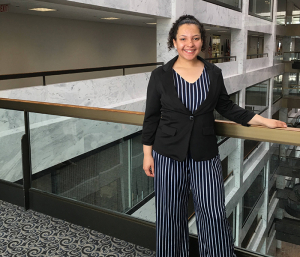 “Supporting the community within my community is very important to me,” Camillia said. “I want to provide resources for children and give them opportunities that they might not have otherwise so they ultimately have the ability to stand on their own.”
There is no doubt that Camillia Washington will continue to use her skills and passion to make a difference for people and organizations around her.
“I am not done yet,” declared Camillia. “I have so much more to learn.”
“Supporting the community within my community is very important to me,” Camillia said. “I want to provide resources for children and give them opportunities that they might not have otherwise so they ultimately have the ability to stand on their own.”
There is no doubt that Camillia Washington will continue to use her skills and passion to make a difference for people and organizations around her.
“I am not done yet,” declared Camillia. “I have so much more to learn.”
Camillia Washington is preparing for the future through academic, campus experiences
Camillia Washington, Dismas Ministry Ambassador
Camillia Washington, Dismas Ministry Ambassador
Original post written by Kathleen Hohl, University Communications, kghohl@stritch.edu found at Camillia Washington is preparing for the future through academic, campus experiences (stritch.edu)
By Tyler Curtis
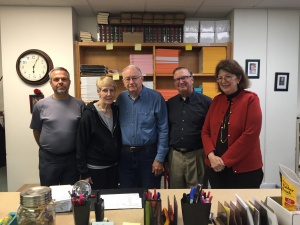
The Order of Malta volunteers include, from left,
Steve DeGuire, KM, Mary Cesarz, Mike Cesarz, KM, Dan McCarthy, KM, Hon. Beth Hanan, DM
Every month, Dismas Ministry Board Member Dan McCarthy coordinates a special group of volunteers who visit our operations located at Cardinal Stritch University. This crew on campus is comprised of members of the Milwaukee chapter of the Order of Malta.
Dan serves in the role of Hospitaller with the Federal Association of the Order of Malta, a lay religious order of the Catholic Church. The Order of Malta is active in 120 countries, caring for people in need through its medical, social, and humanitarian works. Projects run by the Order provide sources of constant support for forgotten or excluded members of society.
Since May 2021, this dedicated group has been helping package Catholic scripture, faith, and prayer resources for delivery to prisoners and to the chaplains and volunteers who minister to them. When asked what they like most about volunteering with Dismas Ministry, Dan said: “We feel we are helping those in prison strengthen their faith or maybe even establish their faith for the first time.”
In serving prisoners and supporting chaplains, the Malta volunteers help support those on the margins. “Just knowing that we are supporting those in prison, and in prison ministry, makes us happy,” added Dan. “The Gospels tell us to serve those in need, and specifically calls out those in prison. And, our support of Dismas Ministry’s efforts helps us demonstrate our commitment to our faith.”
According to Dan, the packaging work they do is pretty straightforward. They take great care to ensure that the packages contain the right materials and the correct quantities requested. The packages are then sealed and mailed to jails and prisons located throughout the United States.
This volunteer team encourages others to learn more about Dismas Ministry and get involved. “The hardest decision is to start. Once you get past that you will find the work a great first step in helping those in need,” said Dan.
Thank you to Board Member Dan McCarthy and the Order of Malta volunteers who help us. Their contribution to the mission of Dismas Ministry is invaluable.
This article was printed in our 2021 Fall Newsletter, Remember Me.
By Tyler Curtis
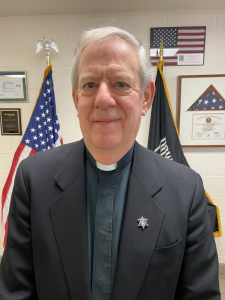
Dismas Ministry Board Member Fr. Richard Deshaies, SJ
Fr. Rich Deshaies is a Catholic chaplain to the imprisoned in the greater Boston area. While he is engaged in other important ministries of the USA East Province of the Society of Jesus, of which he is a member, he is a strong advocate for the spiritual needs of men and women behind bars. He currently serves as a contract Catholic chaplain with the Middlesex Sheriff’s Office at the Middlesex Jail and House of Correction in Billerica, Massachusetts.
Dismas Ministry Executive Director Tyler Curtis talked recently with Fr. Rich about his ministry to prisoners.
TC: What have you learned from your work with prisoners?
RD: There are common misconceptions about the incarcerated. They are very much like those in free society. They share the common concerns about work, career, and raising children. They come from every conceivable background. Most are U.S. citizens, but a growing number are migrants from other countries.
TC: What are some of the challenges you face in this ministry?
RD: This is definitely a type of mission work. As an institution, our Church has struggled in her outreach to Catholics behind bars. With ever-decreasing numbers of priests and deacons, there is a need for more involvement from parish laity and more support at the diocesan level. The lack of material and human resources, and an increasing unfamiliarity with our faith tradition have created barriers. The challenge is often not with inmates, but with prison and jail administrations, correctional officers, and society.
TC: What do you want others to know about the struggles of the imprisoned?
RD: The men are extremely grateful and say, “Thank you, Lord, for sending Fr. Rich.” They are especially grateful to not be forgotten. They want religious services and faith-based materials. I am a pastor to them and offer other guidance, too. Sometimes they need help explaining themselves in court. I often say, “What about telling the truth, and being a person of integrity throughout the adjudication of your case?” However, the truth is not always completely clear when dealing with mental illness or extenuating circumstances. Also, they might not always grasp the impact of their actions on others, and sometimes have difficulty admitting their crimes. When they realize they have done something abhorrent, there is self-loathing and despair. But the truth is not solely about about what we do; it’s about the love of God. And God forgives. And they want us to pray for them, especially when they go to court. I tell them, “God has a purpose for you and still values your life.” God does not spurn the lowly; He honors the lowly and hears the cry of their prayer. In this ministry, I am helping people return to a normative community after they have committed a reprehensible crime, often against themselves, as in the case of drugs. They want to be forgiven by society but don’t know how to pursue this. To be forgiven enables reparation of their misdeeds and sets them solidly on the journey of moral and spiritual rehabilitation.
TC: What can we do to help support our brothers and sisters behind bars?
RD: Through financial donations, which helps us get faith-based materials into the hands of those who need it. Pray for these men and women and their families. Also, pray for correctional staff and for criminal justice reform. Provide help to those reentering society. And invite others in the Church to engage in this “forgotten” work of mercy. We need to elevate prison ministry as a special missionary endeavor of our Church.
A Jesuit priest, Fr. Richard Deshaies, SJ, is a Dismas Ministry board member based in Boston, MA. Born and raised in Connecticut, he entered the Society of Jesus in 1982. Fr. Rich has served in a variety of ministries in the United States and Jamaica throughout his priesthood. A dedicated chaplain to the incarcerated of greater Boston for 10 years, he helped develop a national forum for Catholics in criminal justice and prison ministries – the Catholic Prison Ministries Coalition (CPMC). Fr. Rich is also a member of the American Correctional Association (ACA) and the ACCA (American Correctional Chaplains Association).
This article was printed in our 2021 Fall Newsletter, Remember Me.